

Introduction to Precision Agriculture
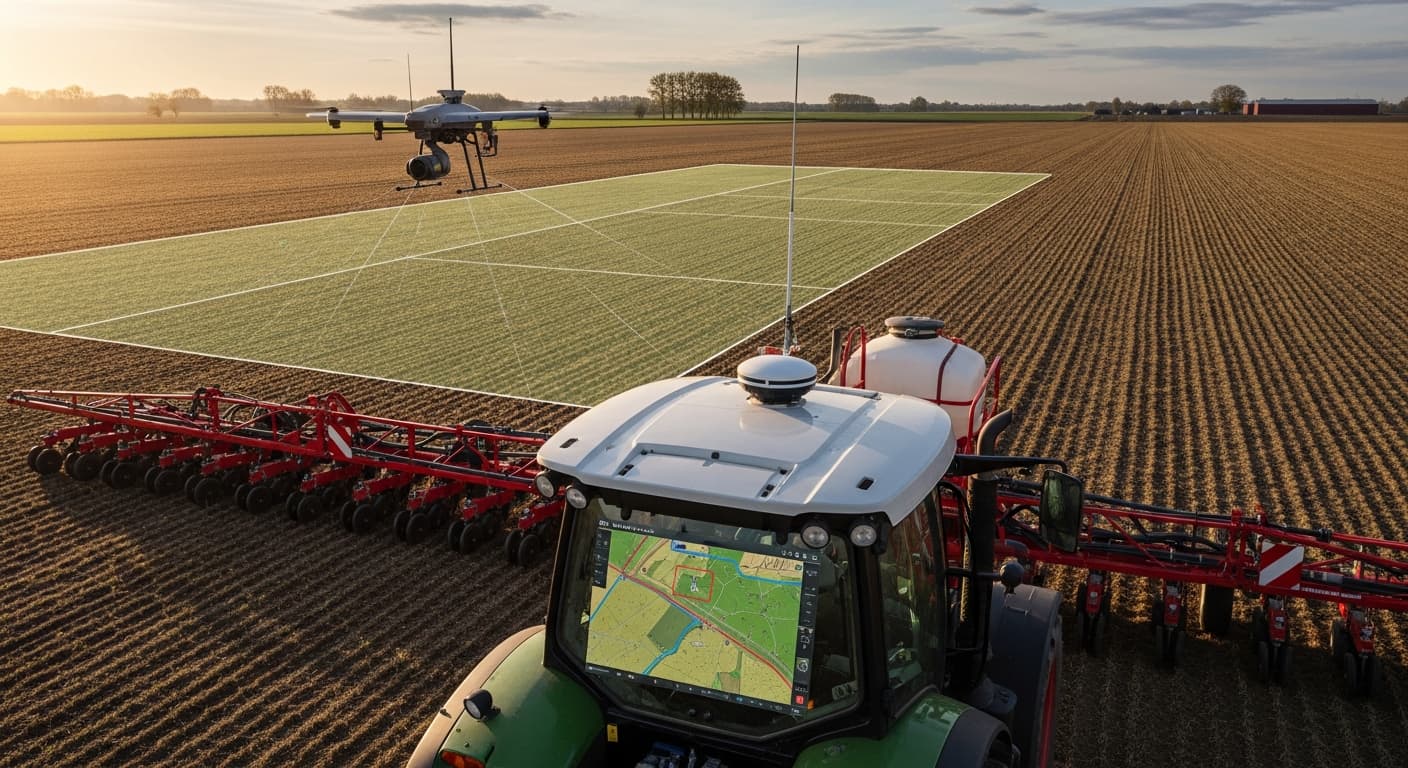
Modern agriculture is rapidly evolving, driven by technology that improves efficiency, productivity, and sustainability. One of the most important innovations in this transformation is GNSS-based precision farming. It enables farmers to manage fields with centimeter-level accuracy, reducing waste and optimizing every stage of crop production.
What Is Precision Farming GNSS?
Precision Farming GNSS refers to the use of Global Navigation Satellite Systems to guide farming operations such as planting, fertilizing, irrigation, and harvesting. By using real-time positioning data, farmers can map fields accurately and make data-driven decisions.
Why GNSS Technology Matters in Agriculture
The integration of satellite navigation allows machinery to operate with extreme accuracy, even in low-visibility conditions. This reduces overlap, minimizes resource use, and ensures uniform crop growth across large agricultural areas.
Why Precision Farming GNSS Is Essential for Modern Crop Management
Why precision farming gnss Is Essential for Modern Crop Management lies in its ability to transform traditional farming into a highly efficient, data-driven system. Farmers can monitor soil conditions, track crop health, and apply inputs exactly where they are needed.
This approach reduces fertilizer and pesticide waste while increasing yield consistency. It also helps farmers respond quickly to environmental changes, improving resilience against climate variability.
Key Benefits of GNSS in Crop Management
1. Improved Field Accuracy
With GNSS guidance, tractors and equipment follow precise paths. This eliminates overlapping passes and missed sections, ensuring every part of the field is treated evenly.
2. Increased Crop Yields
By optimizing planting patterns and resource distribution, GNSS technology contributes directly to higher productivity and healthier crops.
3. Reduced Operational Costs
Fuel consumption, chemical usage, and labor costs are significantly reduced due to improved efficiency and automation.
4. Sustainable Farming Practices
Why Precision Farming GNSS Is Essential for Modern Crop Management also becomes clear when considering sustainability. Reduced chemical usage and better soil management help preserve the environment for future generations.
How GNSS Improves Decision-Making in Farming
Data collected through GNSS systems helps farmers analyze field variability. This enables site-specific management strategies, where different parts of a field receive customized treatment based on their needs.
The Future of Precision Farming GNSS
As technology advances, GNSS systems are expected to integrate with AI, drones, and IoT sensors. This will further enhance automation and predictive analytics in agriculture.
Conclusion
In today’s agricultural landscape, efficiency and sustainability are more important than ever. Why Precision Farming GNSS Is Essential for Modern Crop Management is evident in its ability to increase yields, reduce costs, and promote environmentally responsible farming practices. As adoption continues to grow, GNSS will remain a cornerstone of modern crop management systems.
